Improper watering is the primary cause of houseplant death, often outranking pests or poor lighting as the main culprit. Mastering this skill requires learning to read the total environment rather than sticking to a fixed calendar.
The Golden Rule: Test, Don’t Guess
- The Pot Weight Test: Lift your container immediately after a deep soak to establish a “heavy” baseline for comparison. As the plant consumes moisture, the pot will feel significantly lighter, signaling that the soil has dried out and is ready for hydration. This is a fantastic secondary check, especially for plants in hanging baskets where the soil might be difficult to reach manually.
- Diagnostic Tools: For deep or large pots where fingers cannot reach the bottom, use a wooden skewer or moisture meter. These tools provide a more precise reading of the root zone, helping to identify if the top is dry while the bottom remains dangerously soaked.
- The Bottom-Leaves Check :Observe the lowest leaves on the plant stem. Thirsty plants shed or droop lower leaves first to save water.
- The chopstick method:Insert a plain wooden chopstick deep into the soil.Clean dry wood means the soil is dry.
Adapting to Your Environment
- Seasonal Adjustments: Plants grow slower and require much less water during winter , while summer heat demands more water.
- Identify Distress: Drooping leaves can mean a plant is thirsty, but they also signal drowning from overwatering.
- Drainage is Key: Ensure pots have holes to allow excess water to escape and prevent rot caused by standing liquid.
Mastering the Watering Technique
- Water Deeply: Pour water slowly and evenly over the soil surface until you see liquid running out from the drainage holes. This ensures the entire root zone is hydrated and encourages the roots to grow deeper and become more resilient. Watering deeply and infrequently is far superior to giving “sipping” splashes that only wet the surface.
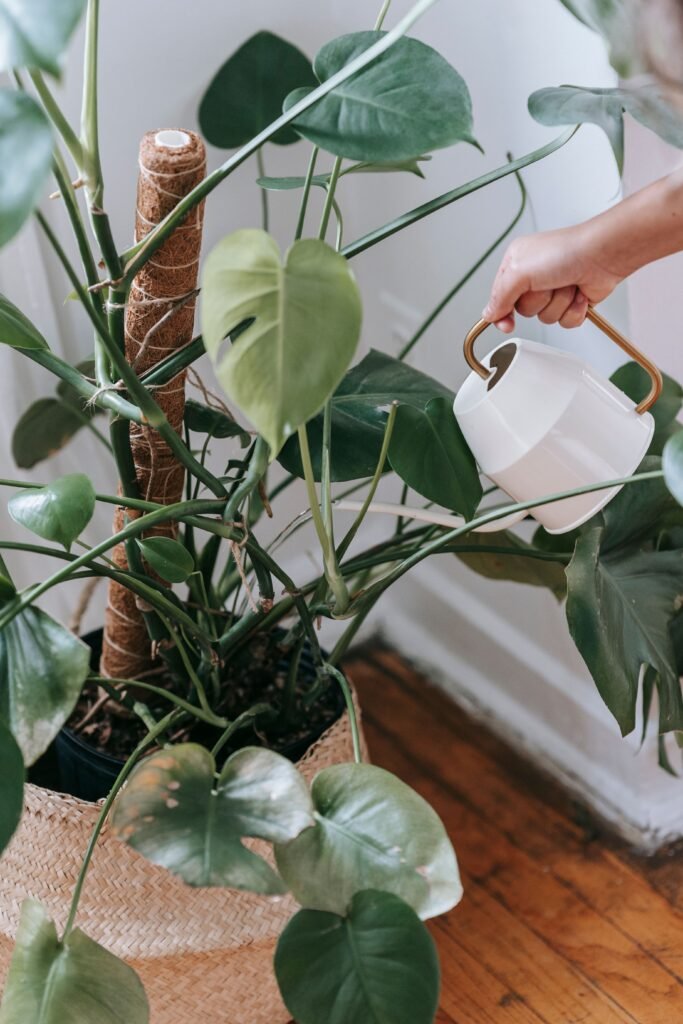
- Target the Soil:Direct your watering can at the base of the plant to reach the roots directly while keeping the foliage dry. Persistent moisture on the leaves can attract fungal diseases or cause leaf scorch when exposed to intense sunlight. Precision helps prevent mold growth on the surface and maintains the overall health of your collection.
- Bottom Watering: Place your pot in a shallow tray of water for 20 to 30 minutes to allow the soil to rehydrate through capillary action. This method is ideal for plants with sensitive leaves or for reviving bone-dry soil that resists water from the top. Always discard excess water after the soak to prevent the roots from sitting in stagnant puddles.
Choosing the Right Water Quality
- Best Sources: Rainwater is the gold standard for most species because it is naturally soft and chemical-free.
- Tap Water: Let tap water sit for 24 hours to allow chlorine to off-gas before using it.
- Sensitive Species: Use distilled or filtered water for sensitive plants like Orchids to avoid brown leaf tips.
Healthy plants come from consistent observation and adjusting to the unique needs of every pot. By testing the soil and watering deeply, you can create a thriving indoor jungle.